Q&A with Bari Reid
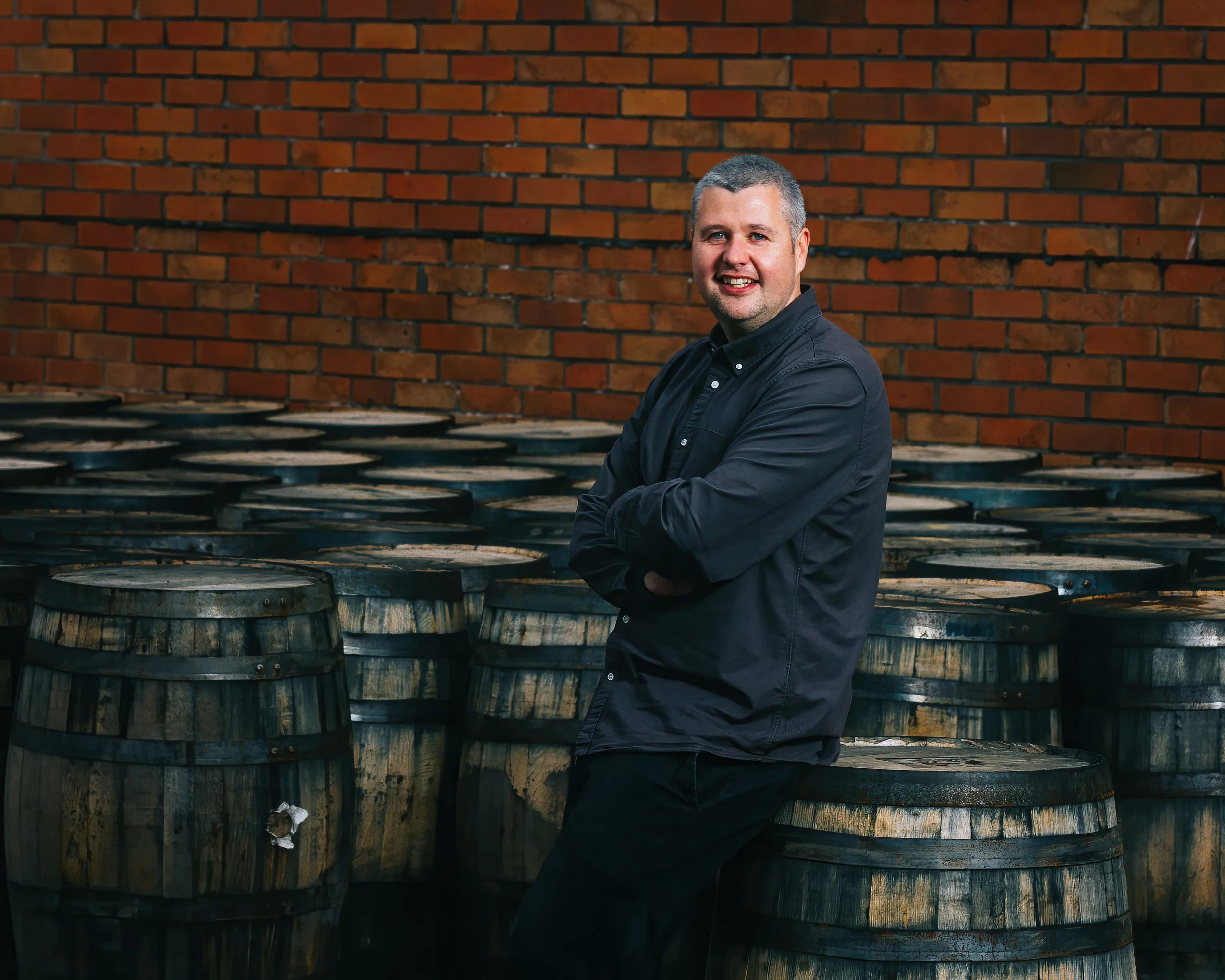
What first drew you into working with distilleries and spirit brands?
My first taste (excuse the pun) was joining Organic Architects to run the construction phase of Lindores Abbey Distillery after a brief chat with Gareth.
As first distillery projects and clients go, that was a gift. The complexity involved in designing and delivering a working distillery is absolutely fascinating. You are constantly trying to find the right balance between technical requirements, safety, visitor experience, brand, budget and programme. When it is done well, all of those competing demands come together into a building that genuinely works, but also feels like it belongs to the spirit being made there.
What makes a distillery project different from a conventional building project?
There are so many layers to these projects. You have a team full of expert knowledge, and those experts do not always agree. As lead consultant, you are often trying to find the best compromise between production, process, safety, planning, brand, visitor experience and commercial reality, while still protecting the overall ambition of the project.
Each distillery is a unique mix of factors. Some are highly visitor-focused, with the building acting as a major part of the brand experience. Others are almost entirely focused on efficient production. Both bring their own challenges, and both still need to be carefully planned. Even the most functional production site has to work for the people operating it every day.
What is the earliest mistake you often see in new distillery projects?
I think it is not taking enough time to understand what you do not yet know.
It is very easy to focus on getting into spirit production as quickly as possible and leave things like brand positioning, route to market, visitor types, future expansion, storage, utilities and operational strategy until later. The problem is that those decisions are often already being shaped by the earliest site and layout choices.
If you set off in the wrong direction, it can be difficult, and expensive, to get the most out of the distillery later.
What should a proper feasibility stage test before anyone commits serious money?
A proper feasibility stage should be robust enough to challenge the project, not just illustrate it.
You should not be afraid to acknowledge that the outcome might mean changing the business plan, adjusting anticipated production numbers, rethinking the visitor offer, or even looking at different sites. There are some basic technical requirements — access, servicing, utilities, drainage, fire strategy, production flow and expansion potential — which can come back to bite you if they are not properly tested early enough.
The more rigour you apply at feasibility stage, the more robust the business plan can become, and the more attractive it is likely to be to funders.
It might not be the most expensive part of the project, but it may be the most valuable.
How do you balance production, visitor experience and brand in the same place?
The more we have worked on distilleries, the more the technicalities of production have become second nature when thinking about site layout, building form and the sequence of spaces.
A distillery always has to be efficient and easy to operate. That is the starting point, not an optional extra. From there, the visitor experience and brand need to be integrated in a way that feels natural rather than forced. Sometimes that is about what visitors see. Sometimes it is about what they do not see. Sometimes it is about arrival, landscape, material choices, views into production, or the way the tour is choreographed.
That integration is where the magic really happens.
What do you wish more clients understood before starting a project?
Timescales are often the hardest thing to get across.
We often speak to clients who want to be producing spirit within exceptionally short timescales. That ambition is understandable, especially when funding, momentum and business plans are all pushing in the same direction. But the critical part is allowing enough time to properly consider what you are doing and why.
The early decisions are the ones that set the direction for everything else. Rushing them can feel like progress, but it can also build in problems that are much harder to unpick later.
When is the right time for a client to speak to you?
The earlier the better.
That might be an initial conversation to understand what they are setting out to do, or it might be looking at potential sites before any design work has even started. Early advice can help test whether the ambition, site, budget and programme are all broadly pointing in the same direction.
We also have access to a wide range of specialists who can help fill knowledge or aspiration gaps for clients, whether that is process, operations, commercial planning, visitor experience or brand. It is important to know what you do not know, and just as importantly, to identify when you need to know it.
What does “Places with Spirit” mean to you?
We are lucky to work with branded environments, often in stunning locations, where the building can be much more than a container for production.
For me, “Places with Spirit” is about creating places that reflect the character, ambition and feeling of the brand, while also being useful, durable and commercially grounded. The best projects become more than the sum of their parts.
Some of the distilleries we have worked with are much more than production buildings. They support the communities they sit within and can become anchors in rural areas. Being part of that is hugely rewarding.
What does Gareth bring to the table?
Gareth is very good at stepping back and asking why something matters, or how a decision aligns with the wider vision for the project.
When you are deep in the detail, it is easy to get caught in the weeds. Gareth has a knack for pulling the conversation back to the bigger picture: what the client is really trying to achieve, where the risks are, and whether the project still feels true to its original ambition.